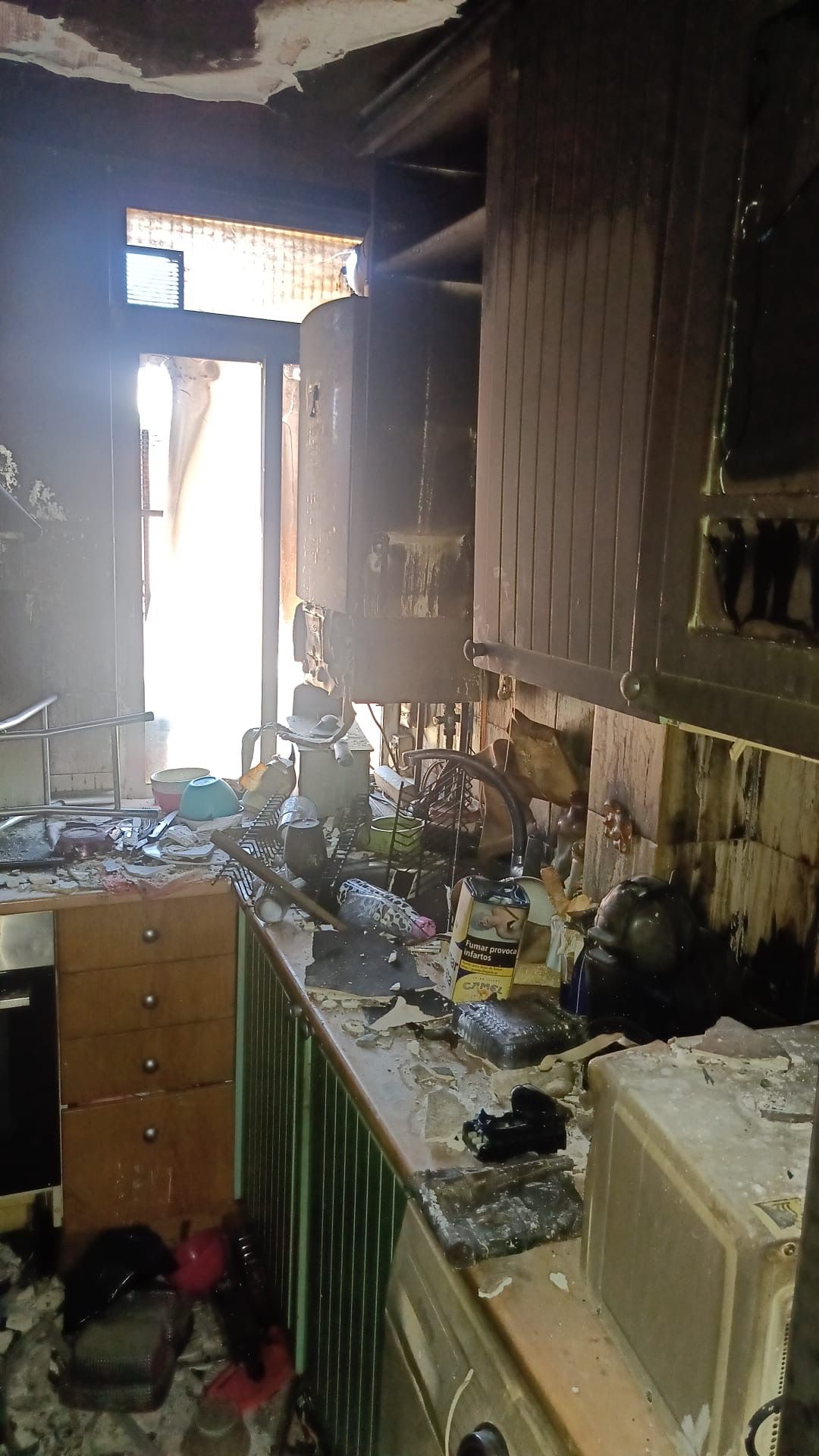
Real case: uninhabitable apartment after a fire in a fourth-floor flat in Madrid
When a fire occurs in a home, the problem does not end when the flames are extinguished. In many cases, the real challenge begins afterwards: with the loss adjuster’s assessment, the valuation of damages and the coordination between different insurance policies to avoid the insured receiving less than they are entitled to.
This is the case of a fourth-floor apartment in Madrid, measuring less than 75 m², with three bedrooms, a small kitchen and bathroom, and a small exterior patio, which was severely affected by a fire.
Condition of the property after the loss
The fire caused significant damage to the apartment:
- Large parts of the property were burned
- Visible damage to ceilings, floors, tiles and plumbing
- Structural damage affecting common areas of the building
- The apartment became uninhabitable
From the outset, it was clear that this was not a simple loss nor a standard home insurance claim.
Two loss adjuster visits and key disagreements
An initial visit was carried out by the insurer’s loss adjuster, but a second on-site inspection was required due to significant disagreements.
The adjuster initially refused to:
- Accept the replacement of part of the tiles
- Properly value the flooring
- Include necessary plumbing works
Situations like this are common and often result in underpaid claims if the policyholder does not act in time.
Key coordination with the building’s insurance policy
One of the most important aspects of this case was the coordination between the home insurance policy and the building’s community insurance policy.
We managed to coordinate with the community’s loss adjuster so that the community-related damages were correctly assumed, avoiding underinsurance and incorrect allocation of costs.
This included:
- Ceilings and structural slabs
- Areas of the exterior patio
- Elements connected to the building’s façade
This step was essential to ensure that damages were not incorrectly charged to a single policy.
Loss of use covered by both insurers
Due to the extent of the damage, the apartment was officially declared uninhabitable.
Thanks to proper coordination between both insurance policies, alternative accommodation was covered throughout the repair period.
Specifically:
- A hotel was covered for the first 10 days
- A similar rental apartment was later approved
- Monthly rent approved: €1,500
- Coverage remained active until completion of the works
Client’s decision: full control over the repairs
Another key decision was the client’s refusal to accept restoration teams imposed by the insurer.
After assessing prior experiences and the real extent of the damage, the client chose to:
- Maintain full control over the repair works
- Manage their own claim
- Avoid low-quality restoration solutions that often cause long-term issues
This approach allowed the property to be restored properly, not just to the insurer’s minimum standards.
What this case shows
This case demonstrates that:
- Fire claims in residential properties are rarely straightforward
- Proper coordination between policies is essential to avoid underinsurance
- Loss of use is a key item that is often undervalued
- Accepting the loss adjuster’s assessment without challenge can mean losing tens of thousands of euros
- Having control over the claim makes a real difference