Hail in farming: when the crop exists but has no value
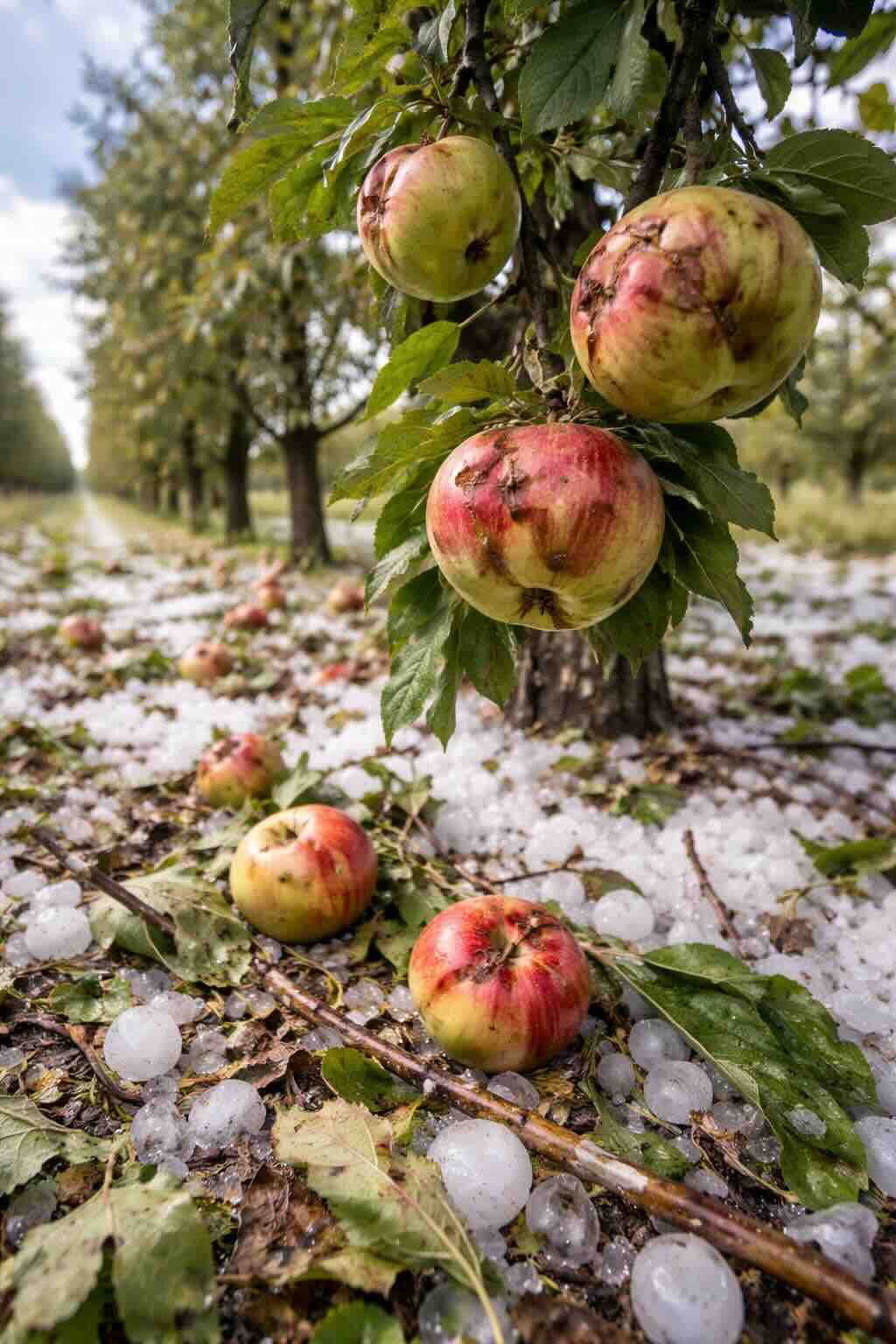
Hail is one of the most feared risks in agriculture. Not only because it can destroy a harvest in minutes, but because in many cases the crop remains on the trees, yet can no longer be sold at its intended market.
This is where many insurance disputes begin.
Hailstorms farmers still remember
In recent years, several severe hailstorms have had a strong impact on Spanish agriculture, widely reported by national and regional media:
- Lleida and Aragón (2022): stone fruit heavily affected, with major marketing losses
- Ebro Valley (2018, 2022): historic damage to fruit and vineyards
- Valencian Community (2023): citrus and persimmon crops downgraded in quality
In many of these cases, the visible damage was only part of the problem.
The fruit is there, but its value is gone
A common and frustrating situation for farmers:
- the fruit does not fall,
- production still exists,
- but quality standards are no longer met.
As a result:
- ❌ export markets reject the produce
- ❌ contracts cannot be fulfilled
- ❌ prices drop drastically
The economic loss is often not fully reflected in the initial loss assessment.
Export markets and quality losses
In fruit, citrus and vineyards, hail often causes:
- surface marks,
- micro-impacts,
- lack of uniformity.
This leads to:
- rejection by international buyers,
- heavy price penalties,
- forced sale for processing at a much lower price.
Damage affecting the next season
Hail may also:
- injure branches and wood,
- weaken trees,
- reduce future yields.
In perennial crops, the impact can extend beyond the current season, but this is rarely included in initial assessments.
Who pays for hail damage in agriculture?
It is important to clarify this:
❌ The Insurance Compensation Consortium does not cover hail damage to crops.
✅ Crop hail damage is covered by AGROSEGURO, provided agricultural insurance is in force.
AGROSEGURO applies specific:
- assessment rules,
- thresholds,
- deductibles.
Disputes usually arise from how these criteria are applied, not from the absence of coverage.
Rapid assessments and unfair outcomes
Farmers often hear:
- “The damage does not reach the minimum threshold”
- “The loss is minor”
Yet the economic reality tells a different story.
When should an agricultural assessment be reviewed?
It is advisable to review the claim when:
- commercial losses are ignored,
- sampling is insufficient,
- future production is affected,
- explanations are unclear.
An initial rejection is not always final.
How we help with agricultural claims
At MataSeguros, we analyze agricultural hail claims with a technical and realistic approach:
- reviewing insurance coverage,
- examining assessments and applied criteria,
- evaluating real economic impact.
Conclusion
Hail does not always destroy crops, but it can destroy their value.
When harvests cannot be sold at fair prices or future production is compromised, accepting an insufficient assessment may have lasting consequences.
Fecha de creación: 2026-01-06
Última edición: